How to compare international grocery prices per unit
Normalize international grocery prices by weight, volume and pack size. Keep discounts, currency and conditional offers visible in the comparison.
Two grocery pages can describe the same brand in grams, ounces, packs or servings. Starting with a proxy and a list of URLs is easy. Building a price series that a category manager can defend takes a little more care.
Separate measurement from marketing
Keep the original quantity and unit, convert to an agreed base, and preserve the original price and currency. Mark whether a multipack contains identical units. A three-for-two deal belongs in a conditional offer field because a shopper buying one item may pay something else. Google Merchant Center product data specification.
Keep the sample inspectable
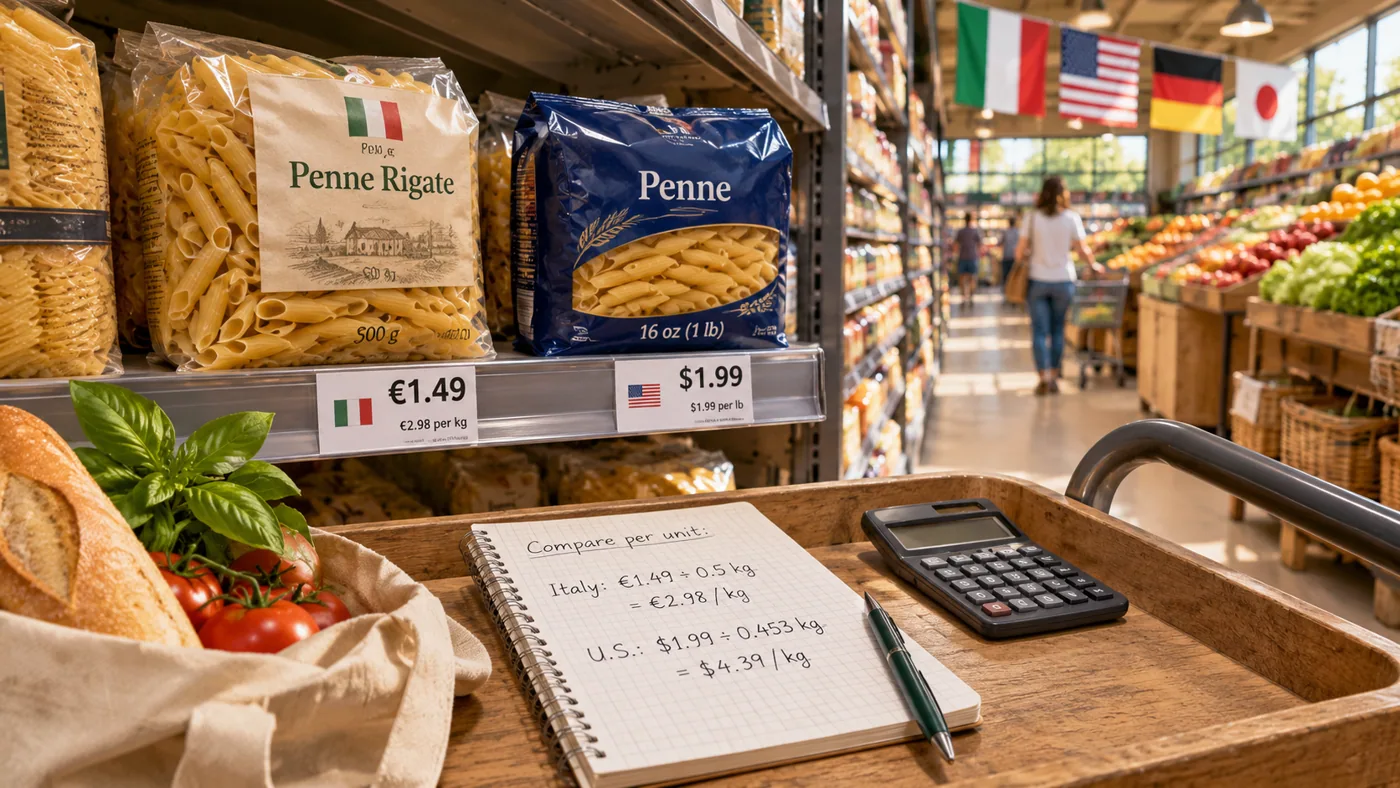
Choose two markets and a few products sold by participating retailers. A 500 g bag at 4 units of currency is 8 per kilogram. A 750 g bag at 5.25 is 7 per kilogram. Compare the unit figures only after the currencies and collection times match your method. XtremeProxy can reproduce a regional shelf view. An audit trail of pack sizes is what makes the price comparison meaningful.
For liquid products, keep volume separate from weight unless the brand supplies a valid conversion. A kilogram of one product is not interchangeable with a litre of another. Where the retailer supplies a per-unit comparison, save that displayed value too. A rounding difference can reveal a source-side display error.
When the multipack price includes a container deposit
Compare a 750-gram pack at 3 euros with a 1.2-kilogram pack at 4.20 euros. The comparable prices are 4 euros and 3.50 euros per kilogram. A refundable deposit on packaging can change the amount collected at checkout. Keep that charge visible beside the net grocery price and spell out which amount the series uses. For a shopper budgeting cash at the till, both numbers matter. For a category buyer comparing contents, a deposit belongs outside the quantity denominator.
Retain the unit printed on the package
A concentrate may list both its original volume and the prepared drink it produces. Pick the basis that fits the report and show it explicitly. A retailer offering a price per prepared litre cannot be compared directly with a price per litre of concentrate without a defensible preparation ratio.
Keep the amount paid at checkout separate from the comparable consumption cost. A refundable bottle deposit changes cash due today, while a nonrefundable packaging fee changes the eventual cost of the purchase. State which treatment your unit-price comparison uses so another analyst can reproduce it.
A multibuy can change the customer's commitment
A single 500-gram bag sells for 2.40, while three bags cost 6.00 under a promotion. The unit prices are 4.80 and 4.00 per kilogram, respectively. The latter requires purchasing 1.5 kilograms. Display the required quantity with the lower unit price and specify whether the comparison models a single item or a qualifying basket.
For produce sold by weight, the number printed beside a product in search results can be an estimated price for one piece. Imagine an apple shown at 0.60 with an estimated weight of 200 grams and a listed rate of 3.00 per kilogram. Compare the declared weight rate with the foreign store's rate, then preserve the per-piece estimate in a separate field. Dividing by an assumed average weight from a different country or variety introduces a difference the retailers never advertised.
Separate the quantity you can buy from the package label you can photograph. A “two for” offer can produce an attractive per-kilogram figure that a shopper buying one pack will never pay. Keep a single-pack calculation and an offer-eligible calculation side by side with the minimum purchase. For products sold in liquid with a separate drained weight, agree which weight represents the comparison before collecting across countries. Use the other weight as descriptive evidence. A difference in the denominator can be larger than the price change under investigation.
Related fieldwork
Publish the original offer next to the standardized quantity and price so a buyer can reconstruct a surprising result. Retain unmatched products when their packaging makes them commercially interesting. Use Bulk pack unit prices to check which units the order actually contains, then apply Comparing online prices across countries without false alerts if the buying decision spans several countries or currencies. Compare XtremeProxy network types.
Frequently asked questions
Can a serving size substitute for weight?
Use servings only when the comparison explicitly concerns a defined serving and the definitions match. Manufacturers may use different portions. For ordinary weight comparisons, normalize the declared net mass and retain the original packaging unit.