
Running checkout QA without placing a real order
Plan authorized checkout tests with sandbox payments, fixture addresses and controlled fulfillment. Verify regional options and expected failures.
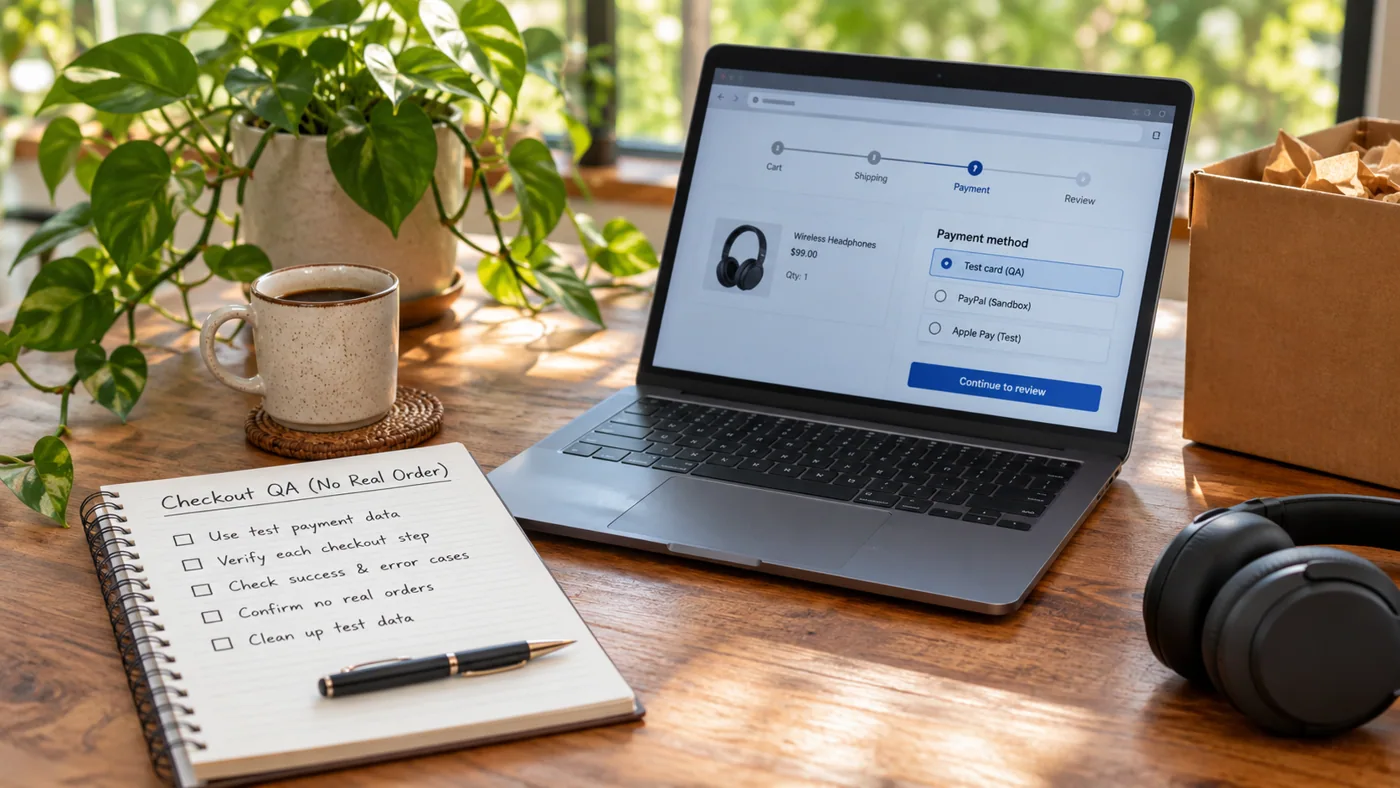
A test receipt in a live inbox or an accidental shipment is an expensive way to discover a geography bug. Before testing across countries, set up the merchant’s supported test-payment mode and agree the expected order lifecycle with operations.
Prepare a controlled test basket
Use a fixture product, approved test address and test payment method. Confirm beforehand which orders send email, decrement stock or trigger fulfillment integrations. A staging environment that looks identical to production can still be connected to a real warehouse. Know how the merchant will identify and clear test orders. Shopify test payment gateway guidance.
Change the network region last
First prove the test works from a known location. Then run the same basket and payment fixture through XtremeProxy from the market being examined. Record whether payment options, currency, shipping and confirmation match the plan. A failed sandbox transaction needs its own classification. Preserve the test order reference and avoid retaining any genuine customer payment details in the observation.
An approved failure fixture is as important as a successful payment. Use the gateway’s documented test-decline case and confirm that no paid order or shipment is created. If checkout creates a pending order, record that expected state and who is responsible for its expiry.
A successful test order that must never enter fulfillment
A staging store links a test payment gateway, but its fulfillment integration still points to a live warehouse. Before the checkout rehearsal, have the store owner confirm the environment of payment, order creation, email and fulfillment. Use a synthetic SKU and a designated recipient for the approved test. If the rehearsal only concerns market choice, stop at the order review screen. For a full rehearsal, confirm the test order identifier in the intended sandbox and record the planned cleanup.
Control downstream side effects
Checkout can reserve stock or emit an analytics conversion before any real money moves. Obtain the merchant's test boundaries for customer messages, inventory, payments and fulfillment. Depending on the desired checkpoint, a preview is sufficient. Where a full sandbox order is needed, preserve only the synthetic reference in the release notes.
Use a disposable test identity that a later tester can recreate. A sandbox account with an old saved card or address may skip a step the release is meant to cover. Record the intended preconditions, then verify that cleanup releases any reservation and makes the next run start in the same state.
Define the last safe action per environment
A release team needs evidence that a delivery method appears on the review screen. That test can end before order creation. A separate integration check needs the payment service's sandbox acknowledgement and therefore enters an approved sandbox order. Give each fixture its own stopping point so a tester does not accidentally turn a display check into a transaction.
Include one controlled failure to verify the checkout recovery path. In the merchant's sandbox, use its documented test instrument or test response to trigger a decline. Confirm that the customer can return to the order review with the expected basket, pricing and delivery selection, and check the test order journal for a single logical attempt. A friendly error page alone cannot establish that recovery works. Record the synthetic reference so the payment integration owner can match the client state with the sandbox outcome.
Ask the warehouse integration owner where a test basket can reserve stock. In a staging example, adding the last unit to the payment-review screen holds it for ten minutes even if the customer never pays. Observe the synthetic inventory record before the run, while the review is open and after the documented expiry. A test environment with no live payment still needs predictable reservation cleanup. A leftover hold can cause the next regional test to report the item unavailable for reasons unrelated to the market.
Related fieldwork
An acceptance record should name its final verified step and whether any synthetic order was created. A team reviewing basket language needs a smaller exercise than a team validating payment-to-fulfillment integration. Payment sandbox egress covers a partner sandbox's egress requirement. Making sure currency stays consistent from product page to cart narrows a suspected issue to the cart currency before a payment is attempted. Compare XtremeProxy network types.
Frequently asked questions
How can we verify a regional checkout that lacks a payment sandbox?
With the merchant's approval, test the steps up to the final submission and label payment authorization untested. Ask the integration owner for a supported test path before extending the claim to payment or fulfillment.