
Evaluating consent transparency in a residential proxy service
Review residential proxy consent transparency with product-specific enrollment, withdrawal and complaint-handling evidence.
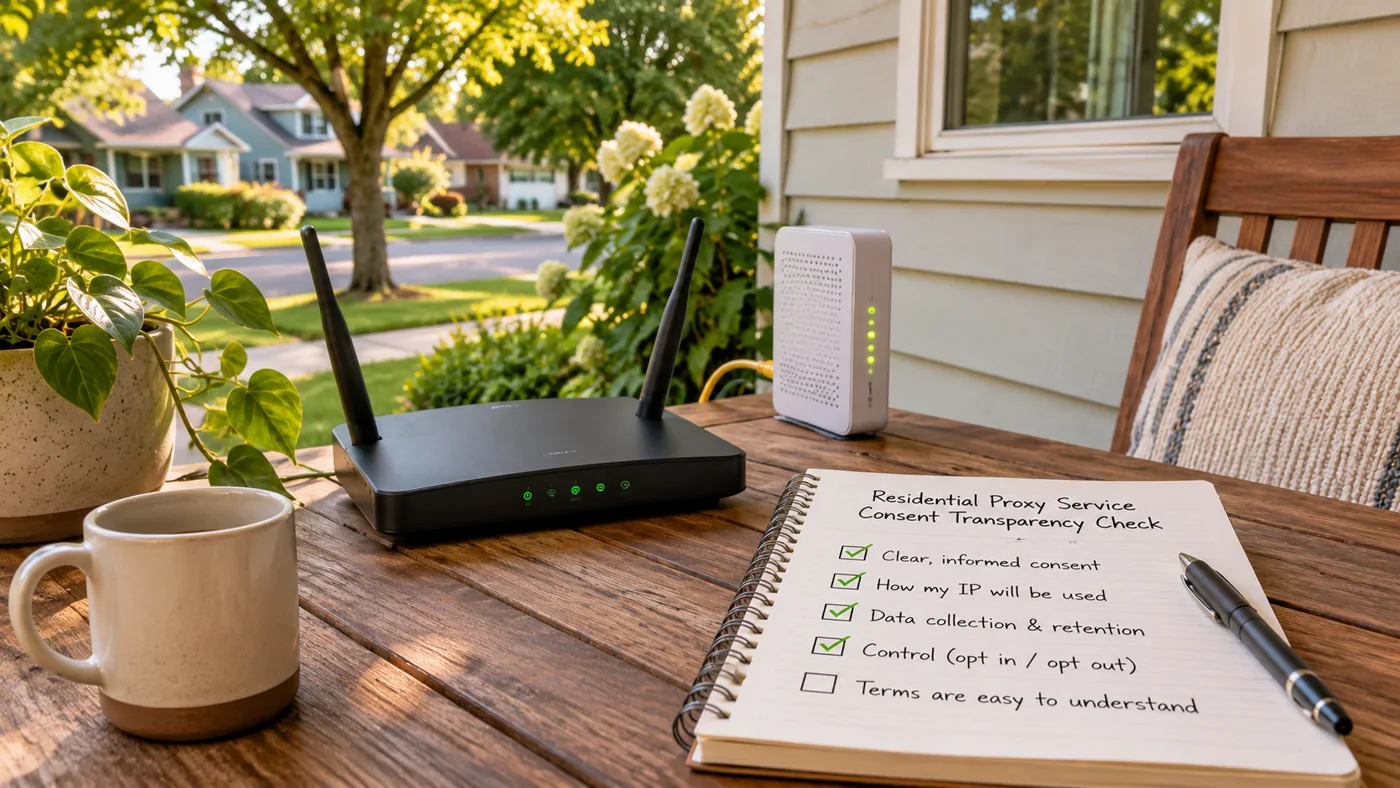
Ask how an address becomes available
A residential service can be relevant to legitimate localization work while still requiring careful sourcing diligence. Ask for an explanation of how a participant learns that a device or connection will carry traffic, what the participant can decline and how participation ends. An address registration record supplies information about an allocation. It cannot explain what a person saw or agreed to on a device.
Look for evidence that matches the product
Request a current example of the enrollment notice, a description of withdrawal and a way to report a concern. Ask which product and region the example covers and who handles complaints after the original enrollment. A generic statement about quality carries less evidentiary weight than a dated, specific explanation. For matters involving consent law, have your privacy team review the actual terms and relevant jurisdiction.
Ask how a participant can recognize and identify the exact service when reporting a concern. An accessible reporting route and a process that links the report to the affected installation are both useful diligence evidence. ICO guidance on consent.
Keep the decision current
Network sources and product configurations can change. Give the procurement record an owner, review date and a clear route for questions raised by users or partners. When evaluating XtremeProxy residential options, ask for the sourcing information applicable to the chosen service. A usable procurement file should explain both why the network suits your authorized project and how your organization evaluated the effects on participants.
A procurement file with a missing withdrawal path
A vendor supplies a dated example of an enrollment notice for one residential product. The file contains no evidence of how a participant exits the program or where complaints go. Record the product and region covered by the notice, identify the missing withdrawal evidence and ask the responsible supplier for a current description. Keep the sourcing decision separate from a performance test. Fast page retrieval supplies no evidence about enrollment, disclosure or a participant's ability to withdraw.
Make the evidence specific to the service
A supplier may offer several residential products with different acquisition methods or partners. Request the participant notice, withdrawal process, complaint route and scope that apply to the proposed service. A generic corporate statement or the registration record for a network block alone cannot close the sourcing review.
A supplier may operate more than one residential sourcing arrangement. Ask which enrollment mechanism supplied the proposed product and whether subcontracted inventory is covered by the same evidence. A clear notice for one source does not establish that participants in a separate source saw it.
Use a dated decision record
A sourcing review receives a participant notice dated March and a withdrawal workflow revised in June. Ask which version a new participant currently sees and whether the two records describe the same service. Date the decision and open questions. A later supplier change is a reason to revisit the evidence, independent of a stable application performance history.
Read the supplier’s public sourcing statement alongside the exact dated terms offered for the pilot. A public disclosure may use a broad brand name while the order identifies a particular partner-operated pool. Ask the procurement owner to record how those two descriptions were linked and who accepted any unresolved gap. If the supplier later changes inventory sources, that mapping supplies a concrete trigger for reassessment. A one-time performance benchmark cannot establish whether the participant-facing arrangement remained the same.
Distinguish a participant’s ability to withdraw from the supplier’s ability to propagate that withdrawal. A notice might describe how to opt out, while the procurement file says little about when the relevant endpoint stops contributing or how downstream arrangements receive that change. Ask for the documented workflow and the responsible party, then identify any part covered only by the supplier’s assertion. This gives a buyer a precise follow-up question without asking for individual participants’ identities or inferring consent from traffic observations.
Related fieldwork
Give the privacy reviewer the specific product, region, participant-facing information and unresolved sourcing questions before a purchase proceeds. A successful regional job can demonstrate fit for the task while leaving a supplier's evidence incomplete. Choosing a residential proxy for regional storefront testing covers that separate storefront suitability decision. Use XtremeProxy's product catalog to identify the exact service about which to request documentation. Technical references include IANA number resource registries. IPRoyal’s residential sourcing disclosure illustrates one supplier’s account of its processes. Review XtremeProxy plans and allowances.
Frequently asked questions
Can an IP registration lookup establish participant permission?
It can provide network allocation or ownership context. Permission requires evidence about participation and the applicable arrangement. Have the appropriate privacy and procurement owners assess the actual service documentation for the intended use.